

Guide to running a butcher shop with an ERP
In the meat business, margin is won or lost between carcass breakdown and delivery. This guide explains what to control, how a specialized ERP differs from a notebook or a generic system, and how to prepare for implementation.
Why does a butcher shop need a specialized system?
A butcher shop does not sell what it buys: a carcass or half carcass comes in and dozens of cuts, trimmings and shrinkage come out. A generic sales system records finished products, but it does not know how much each purchase yields after breakdown or which lot ended up in which sale.
An ERP for butcher shops records weights after breakdown and calculates shrinkage, keeps each lot's slaughter date and origin all the way to the sale, and tracks stock and aging in the cold rooms. With that information you know which purchases yield best and where product is being lost.
How do online sales with variable weight work?
When you sell meat online, the customer orders an approximate quantity, but the actual cut almost never weighs exactly that. If you charge for what was ordered and deliver something else, you get complaints or lose money.
The ERP adjusts the final price to the actual weight cut, and the package label shows weight, lot and expiry date. Because stock is synchronized with the online store, what you publish reflects what you have, and orders can trigger sausage production orders. The electronic invoice is issued once payment is approved and the cash module reconciles web payments. If you do not sell online yet, we also build your online store and support you with digital marketing.
What should you prepare before implementing the ERP?
Be clear about your catalog: the cuts you sell, what they are called and how they are packed. For sausage production, gather your recipes and their ingredients, because they will be the basis for real costing per unit or per kilo.
It also helps to list your suppliers, your regular customers and the zones you deliver to. If you already have breakdown weight records, even in notebooks, they are a starting point for comparing yields. With that information we review your operation, decide what goes live first and train the people who record data in the cutting room, the shop and dispatch.
Which indicators should you review?
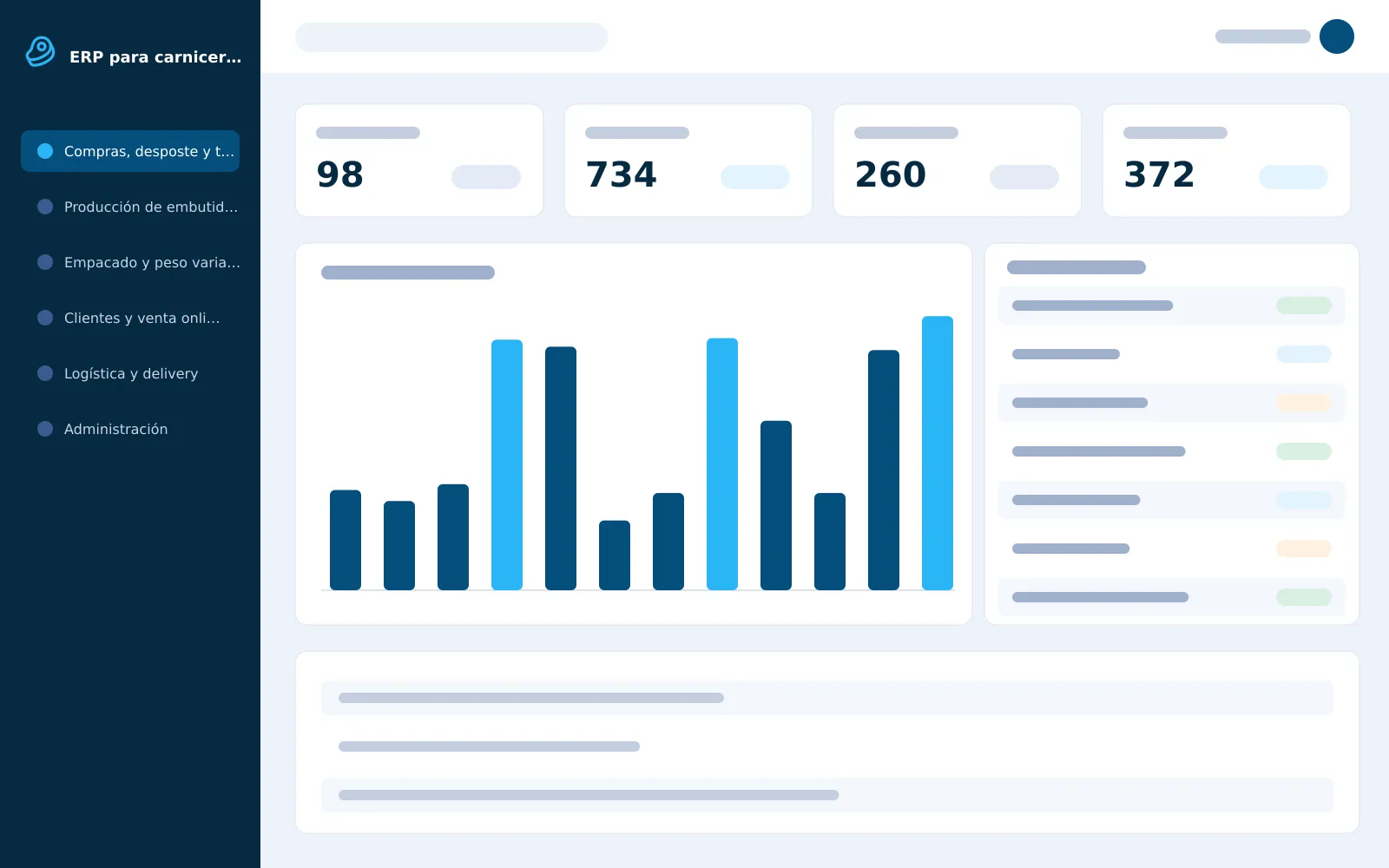
The first is yield per purchase: how much saleable product comes out of each carcass and how much is lost to shrinkage. The ERP's analytics show shrinkage alongside sales by cut, which helps you see which cuts drive the business and which ones sit in the cold room.
For sausages, check the real cost per kilo against your selling price. For delivery, see whether grouping orders by zone keeps dispatch organized and whether the cold chain is checked on every dispatch. A good habit is to review this data every week, not just at month-end, when it is too late to correct.